


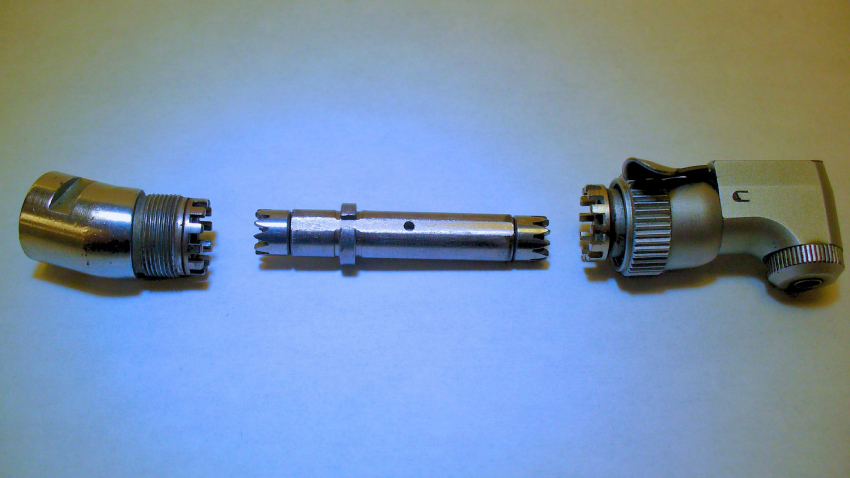
Your low speed handpiece is one of the hardest-working instruments in your practice. It polishes, preps, and scales, day in and day out, often several times per patient. And because it’s so reliable most of the time, it’s easy to take for granted right up until the moment it starts grinding, running weak, or overheating between appointments.
When that happens, most dentists have the same handful of questions. Is this something I can fix myself? Is it the motor or the attachment? Should I repair it or replace it? And how does sending it out for low speed handpiece repair even work?
This guide pulls all of that together in one place. By the end, you’ll understand how a low speed handpiece works, how to care for it properly, how to recognize when something’s wrong, and what your options are when it needs professional attention. Along the way, you’ll find links to more detailed guides on each topic, so you can go deeper wherever you need to.
Key Takeaways
- A low speed handpiece system has two core parts: a motor and an attachment (a contra angle, nose cone, prophy angle, or scaler), and each can wear or fail independently.
- Most low speed problems trace back to one of a few causes: worn bearings, worn gears, a failing chuck, or insufficient lubrication.
- Consistent cleaning and lubrication prevent the majority of premature failures.
- Some care is safe to handle in house, but internal repairs need a technician.
- Catching problems early keeps low speed handpiece repair simpler and less expensive than waiting for a full failure.
- Handpiece Express has repaired more than 140,000 handpieces since 1994, with most low speed repairs completed the same day they arrive.
What Is a Low Speed Handpiece?
A low speed handpiece is a dental instrument that operates at a much lower rotational speed than a high-speed turbine handpiece. Where a high speed handpiece is built for rapid cutting with relatively low torque, a low speed handpiece is built for control and high torque (or power), which makes it the right tool for polishing, cavity preparation, and slow cutting.
The key difference is in how the two types generate motion. A conventional (air powered) high speed handpiece spins a bur directly using compressed air, with no internal gearing. A low speed system works in two parts instead:
- The motor supplies the rotational power, either from compressed air or an electric micromotor.
- The attachment connects to the motor and adapts that power, using internal gearing to deliver the specific speed and torque a task requires.
That two-part design is the single most important thing to understand about low speed handpieces, because it shapes almost everything else, from how you troubleshoot a problem to how you maintain the equipment. For a full breakdown of the mechanics, our guide on how low speed handpieces work walks through each component in detail. Here, we’ll cover the essentials.
Why Low Speed Handpieces Matter to Your Practice
It’s worth taking a moment on the stakes, because a low speed handpiece is easy to overlook until it fails at the worst possible time.
These instruments are in your daily rotation for prophylaxis, restorative prep, and polishing applications. When one goes down, the disruption isn’t just the cost of the repair. It’s the scramble to keep your schedule moving with one less working handpiece, the rushed appointments, and the temptation to push a failing instrument through “just a few more” procedures.
There’s a safety dimension too. A handpiece that overheats or loses power mid procedure is an instrument running close to a patient’s mouth that isn’t performing the way it should. That’s not a situation any practice wants to be improvising around.
The good news is that most low speed failures don’t come out of nowhere. They build up gradually, and they leave warning signs. A practice that understands the basics of how these instruments work and how to care for them tends to catch problems early, which means simpler repairs, less downtime, and equipment that lasts longer.
The Main Components, Explained
A low speed handpiece is a system of parts that each do a specific job and wear in their own way. Understanding what each piece does makes it far easier to figure out where a problem is coming from.
The Motor
The motor is the power source, and it comes in two designs.
- Air driven motors use compressed air to spin an internal rotor, or impeller. They’re a simple, well established design, with speeds ranging from 5,000 to 20,000 rpm. Air driven low speed motors can be single speed or two speed.
- Electric motors use a micromotor to generate rotation. They tend to deliver more consistent torque regardless of resistance, which is why they’re common in restorative and surgical settings where steady, controlled power matters.
Neither design is universally better, and many practices use both depending on the procedure.
The Contra Angle or Head
A contra angle attaches to the motor and uses internal gearing to reduce speed while increasing torque. That makes it well suited to controlled cutting, where you need low speed but high cutting power. Contra angles come in latch type versions (which accept latch burs that lock in with a small lever) and friction grip versions (which accept burs that seat directly into the chuck).
The gearing inside a contra angle is precisely fitted, which is exactly why internal contra angle repairs call for specialized tools rather than a quick fix at the practice.
The Nose Cone
A straight nose cone accepts lab burs directly, with minimal internal gearing compared to a contra angle. It’s a simpler mechanical design, often used at higher speeds outside the oral cavity, or to support another attachment.
The Prophy Angle
A prophy angle holds a rubber cup or brush instead of a bur, and it’s geared to run at a controlled, moderate speed suited to polishing.
The Scaler
A air driven scaler is the outlier in the low speed family. Instead of continuous rotation, it converts air pressure into rapid oscillation at the working tip, which is what makes it effective for removing calculus during periodontal scaling. Everything else in the low speed system works through rotation and gearing, while a scaler works through vibration.
Quick Note
Each attachment contains a chuck, the small mechanism that grips the bur, cup, or tip. The chuck determines which type of bur an attachment can accept.
Common Low Speed Handpiece Problems and What They Signal
When a low speed handpiece starts acting up, the symptom usually points toward the cause. Here are the problems dentists run into most often, and what each typically means.
Weak Power or No Rotation
If a handpiece has lost power or won’t spin at all, the usual suspects are:
- Low or no air pressure reaching the handpiece: check for a missing gasket and air pressure at the tubing connection
- Debris built up inside over time.
- Worn shaft or gears inside the contra angle, which show up as inconsistent or weak torque.
Grinding, Rattling, or Whining
New noise almost always means something has changed internally. Grinding or rattling often points to bearing wear or gear damage, while a high pitched whine can signal a dry bearing.
Overheating
Heat that builds up after just a few minutes usually comes from friction inside a dry or worn motor or attachment.
Chuck and Bur Problems
A bur that wobbles, slips, or won’t release cleanly points to a chuck that’s lost its grip, developed wear, or collected debris. This is rarely something cleaning alone resolves.
Heads Up: Whatever the symptom, if it doesn’t clear up after proper cleaning and lubrication, the cause is almost always mechanical. Our full low speed handpiece diagnostic guide walks through how to isolate the problem step by step, starting with a simple test that tells you whether the motor or the attachment is at fault.
The Basics of Low Speed Handpiece Maintenance
The single most effective thing you can do to avoid repairs is maintain your handpiece properly. Poor or inconsistent lubrication is behind the majority of premature low speed failures, and it’s entirely preventable.
Good maintenance comes down to a consistent routine:
- Clean first. Clean the exterior after each patient, before any lubricant goes in.
- Disassemble the components. Separate the motor, contra angle, and prophy angle so each part gets lubricated on its own.
- Lubricate the drive air port only. Oil goes into the drive air port, never the exhaust or water port, or it simply gets blown back out.
- Use the right amount. Low speed components need less oil than high speed handpieces. Apply a few drops of oil from a dropper, do not use too much since over oiling makes attachments sluggish.
- Purge the excess. Run the handpiece for 10 to 20 seconds after lubricating to distribute the oil and expel anything extra, then wipe it down and sterilize.
Exact lubrication intervals vary by model, so follow your manufacturer’s instructions rather than a generic schedule. For the complete step-by-step process, including where the oil actually goes on each component and the most common mistakes to avoid, see our guide on how to clean and lubricate a low speed handpiece.
What You Can Handle Yourself vs. What Needs a Technician
One of the most common questions dentists have is where the line sits between DIY care and professional repair. Getting that line right matters, because the wrong DIY attempt tends to turn a manageable fix into a bigger one.
Here’s the short version.
Safe to handle in-house:
- Daily cleaning and lubrication
- Visual inspection for cracks, corrosion, or looseness
- Clearing debris from the chuck with a proxy brush
- Verifying air pressure and motor settings
- Confirming an attachment is matched to the correct motor
Needs a technician:
- Bearing replacement
- Gear repair inside a contra angle
- Chuck/cartridge replacement
- Motor overhauls and rethreading
- Any persistent grinding, overheating, or vibration
When Does Repair Make Sense?
Once a problem is past the point of routine maintenance, the question becomes what to do about it. In the large majority of cases, repair is the practical answer, and often the more economical one.
A quality rebuild restores worn bearings, gears, or a failing chuck to proper working condition at a fraction of the cost of a new handpiece. Because low speed motors and attachments are built to be serviced, replacing an entire unit over a single worn component often means paying for a lot of parts that were working perfectly fine.
There are cases where replacement wins out, such as a housing that’s cracked or damaged, or a model so worn that a reliable repair isn’t realistic. But those are the exception rather than the rule.
A few signs point clearly toward getting a handpiece serviced sooner rather than later:
- Power or speed that’s dropping off mid procedure
- New grinding, rattling, or whining noises
- Heat building up within the first few minutes of use
- A bur that wobbles, slips, or won’t release
- Needing to lubricate far more often just to keep performance acceptable
- Vibration that’s new compared to how it used to feel
How Low Speed Handpiece Repair Works
If you’ve never sent a handpiece out before, the process can feel like a black box. In practice, it’s straightforward, and knowing what to expect takes the uncertainty out of it.
Here’s how it works with Handpiece Express, from first call to the repaired unit back on your bench.
- Request a free estimate. Call or reach out online. There’s no charge for the estimate itself, whether or not you move forward.
- Get a free mailer kit and ship it in. Use the convenient Postage Paid Label to send you handpieces in.
- Receive your written estimate the same day. Once your handpiece arrives, a written estimate is emailed to you the same day, so you know the cost before anything happens. If you decline, there’s no charge.
- Approved repairs begin the same day. Once you approve the estimate, work begins that same day, and most low speed repairs are completed the same day the handpiece arrives.
- Return shipping and warranty. Once the repair is tested and complete, the unit ships back to you, covered under a warranty that ranges from 3 months to 1 year depending on the model and
If anything isn’t right once it’s back in use, a 100% satisfaction guarantee means the handpiece gets reevaluated, and you get a full refund if the issue can’t be resolved.
Why Practices Choose Handpiece Express
Handpiece Express is a family owned dental handpiece repair company based in Round Rock, Texas, and has repaired more than 140,000 handpieces for practices across the country since 1994. Low speed motors, contra angles, nose cones, prophy angles, and scalers are all part of what the team services every day.
What sets the company apart:
- Same-day turnaround on most low speed repairs, so you’re not down an instrument any longer than necessary.
- Free estimates with no charge if you decide not to move forward.
- Warranties up to one year on select low speed motor overhauls, among the strongest coverage in the industry.
- Midwest factory trained and certified technicians, with experience across all major brands, including Star, Midwest, KaVo, & W&H.
- Direct access to the technician who actually worked on your handpiece, plus a 100% satisfaction guarantee backing every repair.
- A founding member of the National Dental Handpiece Repair Association and a BBB A+ accredited business.
The philosophy behind all of it is simple: rebuild what can be rebuilt, recommend only what’s truly needed, and get your equipment back to you fast.
Keep Your Handpieces Running Longer
Understanding how your low speed handpiece works, maintaining it properly, and recognizing the signs of wear early are what keep these instruments running reliably for years. And when something does need professional attention, you don’t have to guess your way through it.
Send in Your Low Speed Handpiece to Handpiece Express and Get It Repaired Fast.
📞 Call: (800) 895-7111
It depends on the model. Some manufacturers recommend lubrication after every use, while others allow for a longer interval on low speed attachments. Check your specific manufacturer’s instructions rather than following a generic schedule.
Use only manufacturer-approved lubricant for your specific handpiece. Using an unapproved product can damage internal seals and gears, and it may void your warranty.
Friction builds up faster than most people expect, which shows up as reduced power, unusual noise, or overheating. Skipping lubrication regularly is one of the most common reasons low speed handpieces need repair earlier than they should.
Yes. Low speed components generally need less lubricant than high speed handpieces, and a dropper is used for the thicker low speed oil.
Yes. Excess lubricant left inside a low speed attachment can make it run sluggish. Purging the handpiece for 10 to 20 seconds after lubricating helps clear out anything extra.
That usually points to a mechanical issue rather than a maintenance one. Send your handpiece to Handpiece Express using our free mailer kit to get it back in working order.